

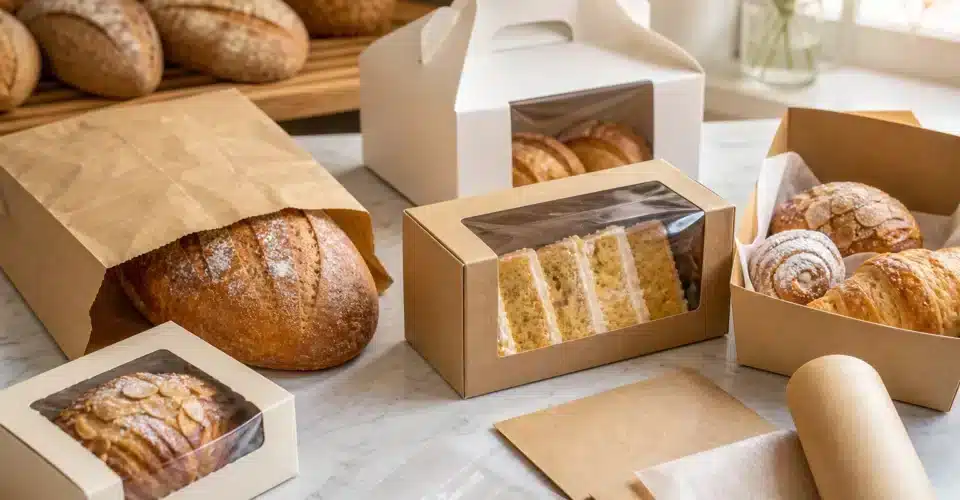
Walk into any supermarket bakery aisle and you will notice something immediately: the products that look freshest, smell the most inviting, and get picked up first are almost always the ones in the best packaging. That is not coincidence – it is science, engineering, and smart brand strategy working in harmony.
Bakery packaging is one of the most technically demanding categories in food packaging. Unlike dry goods or shelf-stable products, baked items are biologically active: they release moisture, absorb ambient humidity, produce CO₂ as they cool, and are highly susceptible to microbial growth, staling, and physical damage. Getting the packaging wrong does not just affect shelf life – it directly affects sales, returns, and brand reputation.
At Vista Packaging, we work with bakery producers ranging from artisan craft bakers to large-scale industrial manufacturers, helping them choose the right bakery packaging solutions for every product type and distribution channel. This guide covers everything food producers, retailers, and packaging buyers need to know about keeping bread, cakes, and pastries fresh – from the science of staling to the film technologies that extend shelf life by days or weeks.
Why Does Bakery Packaging Fail – and What Are the Consequences?
Packaging failure in the bakery category is more common than most producers acknowledge, and it takes several forms. Understanding what goes wrong is the first step to choosing the right solution.
Moisture migration is the leading cause of quality loss in packaged baked goods. Bread that loses moisture becomes stale and dry. Cakes that absorb excess ambient humidity turn soggy and lose their texture. Pastries that experience moisture fluctuation during transport end up with compromised laminate layers and collapsed structure.
Oxygen exposure triggers two distinct problems. In soft bakery products like cakes and muffins, oxygen supports the growth of mould and aerobic bacteria, drastically shortening safe shelf life. In high-fat bakery items like croissants, Danishes, and shortbread, oxygen causes oxidative rancidity – the off-flavour development that makes a product taste and smell stale even before mould appears.
Physical damage during transit is underestimated as a quality factor. Delicate products – layered cakes, cream-topped pastries, meringues, and filled croissants – require structural support from their packaging, not just a moisture barrier. Packaging that collapses under stacking pressure or allows product movement results in damaged goods at the retail display, which are returned, written off, or purchased at a discount.
Poor gas management in sealed packs is a subtler problem. Fresh bread is still biologically active when it is packaged – it releases CO₂ as residual yeast activity continues. If packaging film does not have adequate permeability to allow controlled gas exchange, the atmosphere inside the pack becomes imbalanced, accelerating staling and off-flavour development.
The consequences of these failures compound rapidly: shortened best-before dates, increased retailer returns, negative consumer reviews, and ultimately brand erosion in a category where repeat purchase is everything.
What Are the Main Types of Bakery Packaging – and When Should You Use Each?
Choosing the right packaging format depends on four variables: the product’s moisture content, its fat content, your required shelf life, and your distribution and retail environment. Here is a structured breakdown.
Flow Wrap Film (Horizontal Form-Fill-Seal)
Flow wrapping is the dominant format for individually wrapped breads, rolls, croissants, and muffins in high-volume production environments. A continuous film is formed into a tube around the product on a horizontal flow-wrap machine, sealed at the sides and ends, and cut into individual packs.
Best for: Sliced bread, baguettes, individual rolls, muffins, croissants, doughnuts.
Key film properties to specify:
- Moisture Vapour Transmission Rate (MVTR): Low MVTR retains moisture in soft breads; slightly higher MVTR allows controlled breathing in crusty artisan loaves.
- Seal integrity: Critical for maintaining modified atmosphere where applied.
- Anti-fog coating: Essential for chilled bakery products displayed in transparent packs.
Preformed Pouches (Stand-Up and Pillow)
Preformed pouches are increasingly popular for premium and artisan bakery brands. Available in stand-up, pillow, and flat formats, they offer strong visual presentation on shelf, excellent print quality for brand communication, and flexible format options including resealable zippers.
Best for: Artisan loaves, specialty muffins, cookies, biscuits, granola bars, sliced cake portions, gifting formats.
Key advantages:
- Superior retail shelf presence, particularly stand-up pouches
- Resealable zipper options extend in-home freshness after opening
- Excellent compatibility with modified atmosphere packaging (MAP)
- Suitable for both ambient and chilled bakery distribution
Lidding Films for Tray Formats
Tray-and-lidding-film combinations are the preferred format for filled pastries, sliced cakes, and premium bakery products where product visibility and protection are equally important. A formed or thermoformed tray holds the product, and a lidding film is heat-sealed across the top.
Best for: Sliced gateaux, cream-filled pastries, tarts, delicate layered products, premium gifting ranges.
Key film properties:
- Optical clarity for product visibility
- Peelable seal for easy consumer opening
- MAP compatibility for nitrogen or CO₂ flush where extended shelf life is required
Paper-Based Bakery Packaging
Paper and paper-laminate formats remain important in bakery, particularly for products sold at the point of bake, artisan retailers, and foodservice. Paper allows the natural moisture exchange that crusty breads require to maintain their crust texture – trapping moisture inside film creates condensation that softens the crust rapidly.
Best for: Artisan and sourdough breads, crusty rolls, baguettes, patisserie items sold fresh.
How Does Modified Atmosphere Packaging Extend Shelf Life in Bakery Products?
Modified Atmosphere Packaging (MAP) is one of the most powerful tools available to bakery producers competing on extended shelf life. By replacing the air inside a sealed pack with a carefully calibrated gas mixture – typically nitrogen (N₂) and carbon dioxide (CO₂) – MAP significantly reduces or eliminates the oxygen that drives mould growth and oxidative rancidity.
For soft bakery products (cakes, muffins, filled pastries), MAP typically uses a high CO₂ environment (30–70%) combined with nitrogen as a filler gas. CO₂ at these concentrations has demonstrated antimicrobial effects against the moulds most commonly responsible for bakery spoilage, including Aspergillus and Penicillium species.
For bread, MAP is used more selectively. Sliced bread benefits from a nitrogen-dominant atmosphere that reduces oxygen without the softening effect of high CO₂. Crusty artisan products typically are not MAP-packaged in film – the moisture management requirements of a good crust are better served by paper or micro-perforated film.
Shelf life extension achievable with MAP in bakery:
| Product Type | Ambient Shelf Life (Air) | Extended Shelf Life (MAP) |
| Sliced white bread | 4–6 days | 10–14 days |
| Soft muffins | 5–7 days | 14–21 days |
| Cream-filled pastries (chilled) | 3–5 days | 10–14 days |
| Cookies and biscuits (dry) | 60–90 days | 120–180 days |
| Sliced cake (ambient) | 5–7 days | 14–28 days |
The film specification matters as much as the gas mixture. A MAP system is only as effective as the barrier properties of the packaging film used. Vista Packaging’s bakery films are engineered with precise oxygen and moisture vapor transmission rates to maintain the target gas atmosphere from sealing through to consumer opening.
What Film Properties Matter Most for Bakery Packaging?
When specifying bakery packaging film, these are the technical parameters that directly determine product quality and shelf life:
Oxygen Transmission Rate (OTR). Expressed in cc/m²/day, OTR measures how much oxygen passes through a film per unit area per day. For MAP bakery packs targeting mould inhibition, low OTR (below 20–30 cc/m²/day at standard conditions) is typically required. For ambient-packaged dry cookies and biscuits, higher OTR may be acceptable.
Moisture Vapour Transmission Rate (MVTR). Expressed in g/m²/day, MVTR measures water vapour permeability. Soft bakery products need low MVTR to retain moisture; crusty products may need higher MVTR or micro-perforation to allow controlled breathing.
Seal strength. Consistent, reliable heat seals are essential for maintaining pack integrity from filling through retail handling. Inconsistent sealing – whether from film specification, machine setup, or temperature variation – is one of the most common causes of atmospheric loss in MAP bakery packs.
Antifogging properties. Chilled bakery products stored in transparent film packs are highly susceptible to condensation forming on the inner film surface, obscuring product visibility on shelf. Anti-fog coated films maintain optical clarity through temperature cycling from cold store to ambient retail display.
Printability and aesthetics. Bakery is a category where packaging design directly influences purchase decisions. High-quality flexographic and gravure printing on bakery films produces vibrant, consistent brand graphics that communicate freshness and quality at the retail shelf.
How Should You Package Different Bakery Products Specifically?
Not all baked goods are the same – and their packaging specifications should reflect their individual characteristics.
Bread Packaging
Bread is sensitive to both over-packaging and under-packaging. Soft sandwich bread requires a moisture-retaining film with low MVTR and consistent seal integrity. Artisan and sourdough breads with thick, crunchy crusts require either paper or micro-perforated film that allows controlled moisture exchange – trapping moisture in a sealed low-MVTR film will make the crust soft within hours.
For sliced bread intended for extended shelf life, MAP with nitrogen flush in a low-OTR film significantly extends freshness and is now standard practice for major retail bakery brands.
Cake and Muffin Packaging
Cakes and muffins have high moisture content and are highly susceptible to mould. Their packaging must prioritise:
- Moisture retention (low MVTR)
- Oxygen exclusion (low OTR or MAP)
- Physical protection (structural trays or rigid inserts for delicate products)
- Anti-fog properties for chilled formats
For premium retail formats – individual portions, gifting ranges, and foodservice packs – the print quality and pack structure of the packaging is a direct brand communication tool. Clear windows, matte finishes, and high-impact graphics all contribute to the perceived quality premium.
Pastry and Croissant Packaging
Croissants and laminated pastries present a specific packaging challenge: they are simultaneously moisture-sensitive (they soften if too much moisture is trapped) and fat-rich (the butter layers are susceptible to oxidative rancidity). The optimal packaging approach combines:
- Moderate MVTR film that retains some moisture without excessive condensation
- Low OTR for oxidation prevention
- Adequate headspace or structural support to avoid crushing delicate laminate layers
Flow wrap is the most common format for individual croissants; preformed stand-up pouches work well for multipacks.
How Does Vista Packaging Support Bakery Producers?
Vista Packaging designs and manufactures bakery packaging films and pouches from our facility in Vasai East, India, supplying bakery producers across domestic and international markets. Our approach is built on three principles: technical precision, custom flexibility, and sustainable design.
Every bakery packaging project begins with a full product audit – understanding your product’s moisture content, fat content, target shelf life, filling and sealing equipment, and retail environment. From this foundation, we specify the film structure, gas barrier level, seal properties, and print finish that deliver the exact performance your product needs.
Our bakery film range includes:
- Flow wrap films for high-speed horizontal FFS bakery lines
- Preformed pouches in stand-up, pillow, and flat formats for artisan and premium bakery brands
- Lidding films for tray-sealed cake and pastry formats
- MAP-compatible barrier films for extended shelf life applications
We also offer sustainable bakery packaging options, including mono-material recyclable structures and reduced-thickness downgauged films that maintain barrier performance while minimising material use – aligned with evolving extended producer responsibility (EPR) requirements across global markets.
People Also Ask: Bakery Packaging
What is the best packaging for keeping bread fresh?
Low moisture vapour transmission rate (MVTR) film in a flow wrap or preformed pouch format is most effective for soft bread. For extended shelf life, MAP with nitrogen flush in a low-OTR barrier film can double or triple ambient shelf life. Crusty artisan breads are better packaged in paper or micro-perforated film to allow the crust to breathe.
How long can bakery products last in MAP packaging?
Depending on the product, MAP can extend shelf life from 5–7 days to 14–28 days for soft cakes and muffins, and from 4–6 days to 10–14 days for sliced bread. Dry cookies and biscuits can achieve shelf lives of 120–180 days under nitrogen flush MAP conditions.
What film properties are most important for bakery packaging?
Oxygen Transmission Rate (OTR), Moisture Vapour Transmission Rate (MVTR), seal strength, antifogging properties, and print quality are the five most critical film parameters for bakery packaging performance.
Can bakery packaging be sustainable and still maintain freshness?
Yes. Mono-material recyclable films and downgauged structures can maintain equivalent barrier performance to conventional multi-layer laminates, while meeting recyclability targets. Vista Packaging specialises in developing sustainable bakery film solutions that do not compromise product shelf life or brand aesthetics.
Conclusion: Great Bakery Packaging is a Commercial Advantage
The bakery category is fiercely competitive, and shelf life is a direct commercial lever. Every extra day of freshness that the right packaging delivers is a day of reduced waste, reduced returns, and increased consumer satisfaction.
Getting bakery packaging right requires matching film chemistry to product biology, production equipment to format requirements, and brand aesthetics to retail environment. This is not a one-size-fits-all decision – it requires genuine technical expertise and a packaging partner who understands both the science and the commercial realities of the bakery industry.
Talk to the Vista Packaging team about your bakery packaging requirements. Whether you produce artisan sourdough in small batches or industrial-scale muffins for national retail, we have the film specification, format options, and technical support to help you keep your products fresher, longer.