

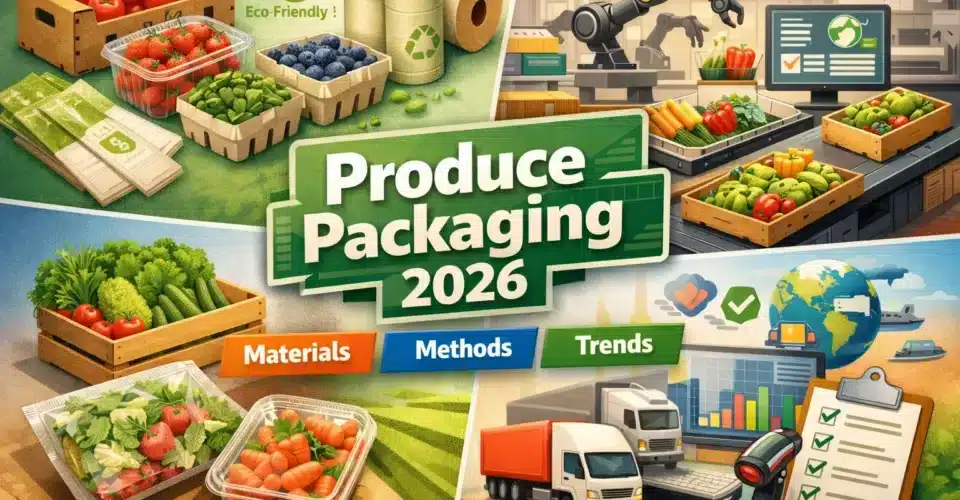
Produce packaging has evolved from simple protection to a strategic tool that extends shelf life, reduces waste, and meets stringent sustainability requirements. As we navigate through 2026, the produce packaging industry faces unprecedented challenges and opportunities shaped by regulatory pressures, consumer demands, and technological innovation. At Vista Packaging, we’ve witnessed firsthand how the right packaging solutions can transform fresh produce distribution while addressing environmental concerns.
The global sustainable packaging industry is projected to reach $737 billion by 2030, with produce packaging leading this transformation. Fresh fruits and vegetables remain living, breathing products after harvest, making their packaging requirements uniquely complex. According to recent industry data, over 90% of exported produce is shipped in specialized packaging designed to maintain freshness during distribution.
What Is Produce Packaging and Why Does It Matter in 2026?
Produce packaging encompasses the materials, technologies, and methods used to protect, preserve, and present fresh fruits and vegetables from farm to consumer. Unlike packaging for processed foods, produce packaging must accommodate the continued metabolic processes of living products while protecting them from physical damage, moisture loss, and microbial contamination.
In 2026, produce packaging serves multiple critical functions beyond basic containment. It extends shelf life through modified atmosphere technology, communicates brand values through sustainable material choices, and ensures food safety through tamper-evident features. Vista Packaging recognizes that effective produce packaging balances three key priorities: product protection, shelf life extension, and environmental responsibility.
The importance of produce packaging has intensified as global supply chains become more complex. Fresh produce often travels thousands of miles before reaching consumers, requiring packaging solutions that maintain quality throughout extended distribution networks. Additionally, with food waste accounting for significant environmental and economic costs, proper packaging plays a crucial role in reducing spoilage and extending sellable shelf life.
How Does Produce Packaging Work to Extend Shelf Life?
Produce packaging works by creating an optimal microenvironment that slows the natural processes of ripening, respiration, and deterioration. Fresh fruits and vegetables continue breathing after harvest, consuming oxygen and releasing carbon dioxide, water vapor, and ethylene gas. Effective packaging manages these metabolic processes to extend freshness.
Modified Atmosphere Packaging (MAP) stands as the cornerstone technology for produce preservation in 2026. MAP systems modify the gas composition inside packages to slow respiration rates and delay enzymatic degradation. According to recent research, optimal oxygen levels for most produce range between 5-8%, significantly lower than the 21% found in ambient air.
The process works through a dynamic interaction between the produce’s respiration and the packaging film’s gas transmission properties. As packaged produce consumes oxygen and generates carbon dioxide, concentration gradients develop that drive gas exchange through semi-permeable films. When properly balanced, these systems reach equilibrium-called Equilibrium Modified Atmosphere Packaging (EMAP)-where gas levels stabilize at optimal preservation levels.
Vista Packaging emphasizes that successful MAP implementation requires careful matching of film permeability to specific produce characteristics. Highly respiring products like mushrooms, broccoli, and fresh-cut salads require more permeable films than slower-respiring items like apples or citrus fruits.
What Materials Are Used in Modern Produce Packaging?
Produce packaging materials in 2026 reflect a dramatic shift toward sustainability without compromising functionality. The industry is moving away from virgin plastics toward recyclable, compostable, and bio-based alternatives that meet both performance requirements and environmental standards.
Paper-Based and Fiber Solutions
Paper-based packaging has emerged as a leading sustainable alternative for produce in 2026. According to DHL’s recent analysis, businesses are increasingly favoring paper-based and biodegradable alternatives over traditional plastics. Corrugated board and solid board packaging now dominate the produce sector, with over 80% being recycled across Europe.
Modern paper-based solutions offer several advantages:
- 100% recyclable with established infrastructure
- Water-based inks and repulpable coatings maintain recyclability
- Natural ventilation properties ideal for respiring produce
- Strong brand perception as environmentally responsible
Innovative developments include paper-based punnets for berries, cardboard alternatives to plastic clamshells, and fiber-based protective trays. Companies like Smurfit Westrock have developed paper-based alternatives to shrink wrap and completely recyclable packaging for fresh produce.
Recycled and Mono-Material Plastics
Produce packaging utilizing recycled PET (rPET) has become standard practice in 2026. Industry leaders now incorporate a minimum of 30% recycled content in food containers, with some manufacturers exceeding this benchmark by 5% or more. Celebration Packaging’s tamper-evident containers and similar innovations demonstrate how recycled materials can deliver both sustainability and food safety.
Mono-material designs-packaging made from a single type of material-have gained significant traction. These solutions simplify recycling by eliminating the contamination issues associated with multi-layer packages. Examples include 100% paper packaging and recyclable PET containers without mixed-material components.
Bio-Based and Compostable Materials
The rise of bio-based materials marks one of 2026’s most significant packaging trends. Polylactic acid (PLA) derived from cornstarch, mushroom-based packaging grown from mycelium, and seaweed-based coatings represent the cutting edge of sustainable produce packaging.
Recent innovations include:
- Seaweed-based coatings: Offering 4-8 week biodegradation with 65-75% lower carbon footprint than PLA
- Mushroom mycelium packaging: Biodegrading in 30-90 days, currently available from 12 facilities globally
- Agricultural waste materials: Sugarcane bagasse and wheat straw transforming waste into packaging
Vista Packaging monitors these emerging materials closely, recognizing that while pilot production is underway, commercial-scale availability and cost competitiveness will determine mainstream adoption timelines.
Smart and Active Packaging Materials
Smart packaging technology has advanced significantly in 2026. QR codes, RFID tags, and NFC sensors now provide real-time product information, traceability, and authentication. Some advanced systems monitor temperature, humidity, and gas composition throughout the supply chain, ensuring optimal storage conditions.
The GS-1 Sunrise 2027 initiative is driving the transition from traditional 1D barcodes to 2D codes like QR and DataMatrix, enabling enhanced traceability and consumer engagement through packaging.
What Are the Main Methods of Produce Packaging?
Produce packaging methods in 2026 encompass various approaches tailored to specific product characteristics, distribution requirements, and sustainability goals.
Clamshell and Container Systems
Rigid plastic clamshells remain popular for berries, cherry tomatoes, and delicate produce requiring protection. Recent innovations include direct printing onto clamshells using food-approved, 100% recyclable inks-eliminating separate labels and improving recyclability. Multisteps Industries pioneered this technology, with Gem-Pack Berries launching these innovative clamshells in early 2026.
Flow-Wrap Packaging
Flow-wrapping technology creates pillow packs using minimal material while supporting sustainable films and paper-based options. The MULTIVAC W 500 Flowpacker represents current capabilities, offering energy efficiency and compatibility with recyclable mono-materials while reducing film usage by up to 50% through advanced sealing technologies.
Modified Atmosphere Trays and Bags
MAP systems for produce utilize specialized films with controlled permeability. Some packages employ microperforation technology-using laser or electrostatic methods to create tiny holes that regulate gas exchange. This approach works particularly well for highly respiring products requiring precise atmospheric control.
Passive MAP allows the produce’s own respiration to modify the atmosphere over 3-5 days. Active MAP systems flush packages with desired gas mixtures immediately, establishing optimal conditions faster and preventing enzymatic browning in sensitive products like cut lettuce, apples, and avocados.
Ventilated Packaging
Corrugated packaging with strategic ventilation remains essential for many produce categories. Proper airflow prevents moisture accumulation, reduces ethylene concentration, and maintains product respiration. According to industry analysis, corrugated solutions deliver high strength, dimensional stability, and humidity resistance ideal for long-distance shipping.
Why Is Sustainable Produce Packaging Important in 2026?
Sustainable produce packaging has transitioned from competitive advantage to business necessity in 2026. Multiple converging factors-regulatory requirements, consumer preferences, and environmental imperatives-make sustainability non-negotiable.
Regulatory Pressures and Extended Producer Responsibility
The EU’s Packaging and Packaging Waste Regulation (PPWR) and Extended Producer Responsibility (EPR) programs have fundamentally reshaped packaging decisions. These regulations increasingly favor packaging that is recyclable, contains recycled content, and has clear end-of-life pathways.
In the United States, California’s SB 1046 exemplifies state-level action, requiring only recycled paper or compostable bags for produce and meat in grocery stores. The PACK Act aims to standardize recyclable packaging claims nationwide, reducing consumer confusion and greenwashing.
Consumer Demand and Brand Reputation
According to McKinsey’s 2025 consumer survey, recyclability ranks #1 when consumers evaluate sustainable packaging. For fresh produce specifically, sustainability jumps higher on priority lists as shoppers view fruits and vegetables as natural products deserving environmentally aligned packaging.
Vista Packaging understands that 83% of consumers say convenience in shopping is more important now than five years ago, creating a dual imperative: packaging must be both sustainable and functional. Brands successfully communicating their sustainability efforts through transparent data and verified certifications build stronger consumer trust.
Food Waste Reduction
Produce packaging’s role in reducing food waste represents perhaps its most significant environmental contribution. Effective packaging prevents spoilage, extends shelf life, and enables longer distribution chains that connect farmers with distant markets. Research shows that well-designed packaging can reduce environmental impact by preventing food waste-often a larger sustainability factor than the packaging materials themselves.
What Are the Leading Produce Packaging Trends in 2026?
Several transformative trends are reshaping produce packaging in 2026, driven by technology, sustainability imperatives, and evolving consumer expectations.
Transparency and Carbon Labeling
“Carbon Labels” have emerged as the new transparency standard in 2026. Similar to nutritional labels, these print carbon footprint data directly on packaging, detailing emissions across the product lifecycle. Certification bodies have made carbon labeling essential trust signals with eco-conscious consumers, supported by increasing regulatory requirements for anti-greenwashing.
Connected and Interactive Packaging
The widespread adoption of AI and connected packaging is revolutionizing consumer-brand relationships. Every package becomes a digital asset through:
- QR codes linking to product origin stories, recipes, and sustainability information
- RFID and NFC tags enabling supply chain traceability
- Augmented reality experiences activated through smartphone scanning
- Real-time freshness indicators and temperature monitoring
Right-Sizing and Material Efficiency
Efficient design has become central to credible sustainability strategies. Right-sizing packaging reduces excess materials, lowers shipping emissions, and prevents damage requiring costly reships. Advanced sealing technologies from companies like MULTIVAC demonstrate how innovation can cut film usage by 50% while maintaining package integrity.
Automation and Smart Manufacturing
AI-driven packaging automation is streamlining operations in 2026. End-of-line equipment including case erectors, sealers, and stretch wrappers ensures consistent packaging quality while freeing warehouse space. AI assists in design mock-ups, material analysis for waste reduction, and packaging strategy optimization.
Companies like 4HM Solutions are bringing European automation technologies to U.S. markets, including machines that automate produce packaging into sustainable cardboard-demonstrating how technology enables both efficiency and sustainability.
Circular Economy Integration
The transition to circular packaging models accelerates in 2026. Reusable and refillable systems require reverse logistics infrastructure for return, cleaning, and refilling. While complex, these systems represent the future of sustainable packaging, particularly for premium produce segments and direct-to-consumer models.
How Can Businesses Choose the Right Produce Packaging?
Selecting optimal produce packaging requires balancing multiple considerations: product characteristics, distribution requirements, sustainability goals, regulatory compliance, and cost constraints.
Assess Product-Specific Needs
Different produce categories have distinct packaging requirements:
- High-respiration products (berries, mushrooms, leafy greens): Require highly permeable films or ventilated packaging
- Ethylene-sensitive items (lettuce, broccoli): Need ethylene-absorbing materials or excellent ventilation
- Fragile produce (tomatoes, soft fruits): Require protective rigid containers
- Long-shelf-life items (citrus, apples): Can use less permeable materials with extended protection
Evaluate End-of-Life Pathways
At Vista Packaging, we emphasize choosing materials with established recycling infrastructure. Sustainable packaging in 2026 is judged less by novelty and more by how well it functions within existing recovery systems. Key questions include:
- Is recycling infrastructure available in target markets?
- Does the material meet regional regulatory requirements?
- Can consumers easily understand disposal instructions?
- What is the actual recovery rate for this material type?
Consider Total Cost of Ownership
While sustainable materials may carry higher unit costs, total cost analysis often reveals different conclusions. Factors to consider include:
- Reduced waste and spoilage rates
- Enhanced brand reputation and premium pricing opportunities
- Regulatory compliance and avoiding future penalties
- Customer loyalty from demonstrated sustainability commitment
Partner with Experienced Suppliers
Working with knowledgeable packaging partners like Vista Packaging ensures access to latest innovations, regulatory expertise, and technical support for implementation. Experienced suppliers can conduct shelf life testing, optimize package designs, and provide guidance on sustainable material selection.
What Challenges Does Produce Packaging Face in 2026?
Despite significant progress, the produce packaging industry confronts several ongoing challenges that shape innovation priorities.
Balancing Performance and Sustainability
The fundamental tension between functional requirements and environmental goals persists. Compostable materials, while appealing, face limited industrial composting infrastructure and can contaminate recycling streams. Industry analysis shows that compostable packaging is only viable in narrow, verified contexts-not as default solutions.
Paper-based materials, despite strong environmental perception, require plastic coatings or composites for moisture barriers, potentially compromising recyclability. Finding materials that deliver necessary protection, shelf life extension, and true end-of-life sustainability remains an active development area.
Cost and Scalability Concerns
Innovative sustainable materials often carry significant cost premiums. Agricultural waste materials currently cost 15-35% more than conventional alternatives, while mushroom mycelium packaging ranges from $2.50-4.00 per unit compared to $1.20-2.00 for EPS foam equivalents. Scaling production to achieve cost parity represents a critical challenge for widespread adoption.
Supply Chain Disruptions
Access to sustainable materials faces ongoing supply chain challenges. Many innovative packaging materials lack comprehensive performance data, complicating assessments of durability, recyclability, and environmental impact. Without clear insights, selecting materials that balance compliance, cost-efficiency, and functionality becomes difficult.
Consumer Education and Behavior
Even optimal packaging designs fail without proper consumer understanding. Confusion about recyclability, composability, and disposal methods undermines sustainability efforts. Smart packaging solutions incorporating clear disposal instructions and QR-coded educational content help address this challenge.
Frequently Asked Questions About Produce Packaging
What is the most sustainable material for produce packaging in 2026?
The most sustainable produce packaging material depends on available infrastructure and product requirements. Paper-based and corrugated solutions offer the best combination of recyclability, established recovery systems, and environmental performance when properly designed. Mono-material recyclable plastics (like 100% recyclable PET) also perform well where recycling infrastructure exists. The key is matching materials to regional recycling capabilities rather than pursuing theoretical sustainability.
How does modified atmosphere packaging extend produce shelf life?
Modified atmosphere packaging extends shelf life by reducing oxygen levels (typically to 5-8%) and increasing carbon dioxide within packages. This slows produce respiration rates, delays enzymatic degradation, and inhibits microbial growth. Properly designed MAP systems can extend shelf life by 50-300% depending on the product, significantly reducing waste and enabling longer distribution chains.
Are compostable produce packages better than recyclable ones?
Not necessarily. Compostable packaging only delivers environmental benefits when industrial composting infrastructure exists and packages actually reach those facilities. Many composting facilities don’t accept packaging, and compostable materials can contaminate recycling streams. In 2026, recyclable packaging with established recovery infrastructure typically offers better real-world environmental outcomes than compostable alternatives lacking proper disposal pathways.
What are the main regulations affecting produce packaging in 2026?
Key regulations include the EU’s Packaging and Packaging Waste Regulation (PPWR), Extended Producer Responsibility (EPR) programs expanding globally, and U.S. state-level requirements like California’s SB 1046. These regulations increasingly mandate recyclable materials, minimum recycled content percentages, and accurate environmental claims. The PACK Act aims to standardize U.S. requirements. Companies must monitor evolving regulations in all markets where they operate.
How much does sustainable produce packaging cost compared to conventional options?
Sustainable produce packaging typically costs 10-35% more than conventional alternatives, though this gap is narrowing. Recycled content materials approach cost parity with virgin plastics, while bio-based alternatives like PLA remain premium-priced. However, total cost analysis including reduced waste, enhanced brand value, and regulatory compliance often favors sustainable options. Vista Packaging recommends evaluating total cost of ownership rather than unit price alone.
What technology innovations are shaping produce packaging in 2026?
Leading innovations include AI-driven design and automation, smart packaging with QR codes and sensors for traceability, advanced sealing technologies reducing material usage by 50%, direct printing on containers eliminating labels, and connected packaging enabling consumer engagement. The transition to 2D barcodes under GS-1 Sunrise 2027 and continued development of bio-based materials like seaweed coatings and mushroom mycelium represent significant technological advances.
Conclusion
Produce packaging in 2026 represents a sophisticated intersection of science, sustainability, and consumer engagement. As the industry navigates regulatory requirements, environmental imperatives, and technological possibilities, successful packaging strategies balance multiple objectives: preserving freshness, reducing waste, minimizing environmental impact, and communicating brand values.
At Vista Packaging, we recognize that optimal produce packaging solutions emerge from deep understanding of product characteristics, distribution requirements, and market dynamics. The shift toward recyclable materials, circular systems, and smart packaging capabilities reflects broader transformation in how the industry approaches its environmental and social responsibilities.
The future of produce packaging will be defined by companies that embrace transparency, invest in sustainable innovations, and partner with experienced suppliers to implement solutions delivering both performance and environmental benefits. As regulations tighten and consumer expectations rise, produce packaging evolves from commodity consideration to strategic differentiator-one that Vista Packaging is committed to helping our clients navigate successfully.