

Roll stock film has become the backbone of modern flexible packaging operations, and for good reason. As the global flexible packaging market reaches $338.44 billion in 2026 and continues its upward trajectory toward $511.69 billion by 2035, understanding roll stock film is more critical than ever for packaging manufacturers looking to optimize their production lines and meet evolving consumer demands.
At Vista Packaging, we’ve witnessed firsthand how roll stock film transforms packaging operations-reducing costs, improving efficiency, and delivering superior product protection. Whether you’re considering a switch to flexible packaging or looking to optimize your current operations, this comprehensive guide will walk you through everything you need to know about roll stock film in 2026.
What Is Roll Stock Film?
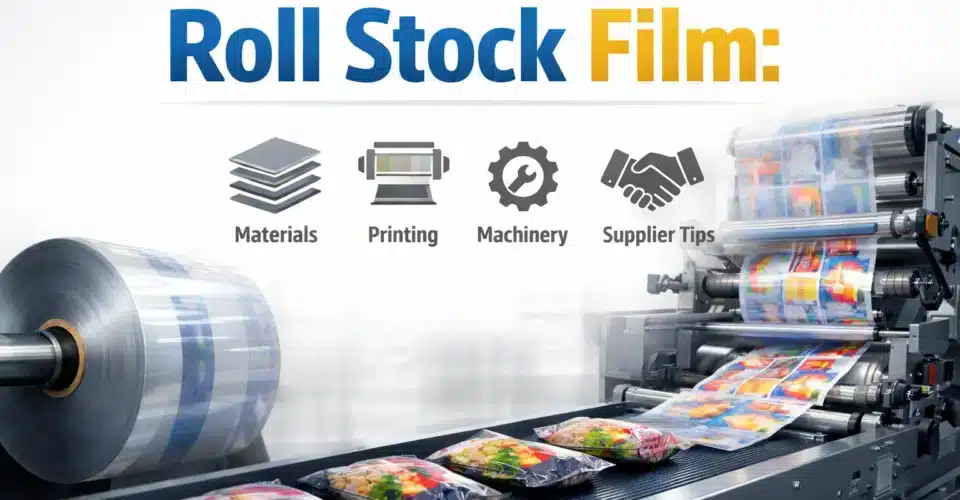
Roll stock film is a continuous roll of flexible packaging material-printed or unprinted-specifically designed to be formed, filled, and sealed directly on form-fill-seal (FFS) packaging equipment. Think of it as packaging in its most efficient form: instead of using pre-made pouches or bags, manufacturers receive their packaging as a single continuous roll that creates individual packages on-demand during the production process.
This packaging format typically comes wound on cores (usually 3″ or 6″ in diameter) and can be customized in terms of width, thickness, material composition, and outer diameter to match specific machinery requirements. The beauty of roll stock film lies in its versatility-it can be transformed into pillow pouches, sachets, packets, lay-flat pouches, and more, all in a single automated process.
According to Vista Packaging’s experience with manufacturers across multiple industries, roll stock film offers unmatched flexibility for brands running multiple SKUs or conducting market testing. Rather than ordering 20,000 pre-made pouches, companies can now run smaller batches of 2,000 units, enabling cost-effective A/B testing and reducing backstock waste.
How Does Roll Stock Film Work?
Roll stock film operates on a remarkably efficient principle that combines material science with automated machinery. The process begins when the film roll is mounted onto form-fill-seal equipment-either vertical (VFFS), horizontal (HFFS), or flow-wrap machines depending on your product and packaging requirements.
Here’s how the process unfolds: The film unwinds from the roll and passes through the forming station, where it’s shaped into the desired pouch or bag configuration. Next, the product is dispensed into the formed package at the filling station. Finally, the package moves to the sealing station, where heat sealing (or cold sealing for temperature-sensitive products) creates an airtight closure. The completed package is then cut from the continuous film, and the cycle repeats-often at speeds of hundreds of packages per minute.
The coefficient of friction (COF), thickness control, and sealing window of the film are precisely engineered to minimize downtime, prevent film breaks, and reduce leakers on high-speed packaging lines. Vista Packaging recommends working with suppliers who provide detailed technical specifications for these parameters to ensure compatibility with your specific equipment.
Many manufacturers partner with co-packers who specialize in this form-fill-seal process, eliminating the need for in-house packaging equipment while still benefiting from roll stock film’s advantages. This arrangement works particularly well for brands testing new products or those with seasonal production demands.
Why Is Roll Stock Film Important in 2026?
Roll stock film has emerged as a critical packaging solution in 2026 for several compelling reasons that directly impact manufacturers’ bottom lines and operational efficiency. The flexible packaging market is experiencing unprecedented growth, with the U.S. market alone expected to reach $91.95 billion by 2032, growing at a remarkable 9.41% CAGR-largely driven by roll stock film adoption.
Cost Efficiency Leads the Way: Roll stock film reduces packaging costs by up to 70% compared to rigid alternatives when factoring in storage, shipping, and material usage. The lightweight nature of flexible films translates directly to lower freight costs, while the ability to store large quantities of packaging in minimal warehouse space further reduces overhead. At Vista Packaging, we’ve helped manufacturers cut their packaging expenses by 30-40% simply by transitioning from pre-made pouches to roll stock film.
E-Commerce Revolution Drives Demand: The explosive growth of e-commerce-which reached approximately $215 billion in the first quarter of 2021 alone in the United States-has created massive demand for durable, lightweight packaging solutions. Online grocery shopping now accounts for 12.4% of total e-commerce sales, necessitating robust packaging that protects products during transit while keeping shipping costs manageable.
Sustainability Meets Performance: With 2026 bringing increased regulatory pressure for eco-friendly packaging solutions, roll stock film offers recyclable mono-material structures, downgauging opportunities, and reduced carbon footprints compared to rigid packaging. Recyclable polyethylene (PE) films that are How2Recycle approved and Post-Consumer Recycled (PCR) films are now readily available, helping brands meet their sustainability commitments without sacrificing performance.
Production Flexibility: The ability to run shorter production runs-as low as 1,000 linear feet per artwork file with some suppliers-enables brands to test new markets, launch limited editions, and respond quickly to consumer trends without the financial burden of large minimum orders.
What Are the Types of Roll Stock Film Materials?
Roll stock film materials have evolved significantly, with 2026 bringing a diverse portfolio of options tailored to specific product protection requirements and sustainability goals. Understanding these materials is crucial for selecting the right film structure for your application.
Polyethylene (PE) Films: Plastic materials dominated the flexible packaging market in 2026, accounting for approximately 46.82% of total market share, with PE leading due to its excellent sealability, high moisture barrier, and impressive strength-to-weight ratio. PE can be extruded with EVOH (ethylene vinyl alcohol) layers to enhance barrier properties or with high EVA content to improve heat-sealing characteristics. According to Vista Packaging’s technical team, PE films remain the default choice for cereal liners, frozen food applications, and detergent pouches due to their established recycling streams and wide resin availability.
Polypropylene Films (BOPP/CPP): Bi-oriented polypropylene (BOPP) and cast polypropylene (CPP) films offer exceptional clarity, strength at minimal thickness, and superior printability. BOPP/CPP structures are highly transparent, making them ideal for products where visual appeal matters, such as snack foods and confectionery items. These films can also be metallized for enhanced barrier properties and attractive shelf presentation.
Polyester (PET) Films: PET film packaging delivers high clarity and strength while maintaining low thickness and excellent printability. This heat-sealable film is suitable for various applications and can be metallized for additional barrier protection. PET-based laminates (such as PET/AL/PE or PET/VMPET/PE) are commonly used for products requiring superior oxygen and moisture barriers.
Nylon (PA) Films: Polyamide films provide exceptional puncture resistance and are frequently used in multi-layer laminates like PET/PA/PE for applications requiring high mechanical strength, such as vacuum packaging for meat and poultry products.
Sustainable Alternatives: Biodegradable and compostable polymers are exhibiting the fastest growth at 7.65% CAGR from 2026-2031 as retailers introduce home-compostable private-label lines. PLA (polylactic acid) and PHA (polyhydroxyalkanoate) based coextrusions now mimic LDPE toughness while breaking down within industrial composting cycles, realigning R&D budgets toward circular packaging solutions.
How Do You Choose the Right Roll Stock Film for Your Product?
Roll stock film selection requires careful consideration of multiple factors that balance product protection requirements, machinery compatibility, sustainability goals, and budget constraints. Here’s a systematic approach recommended by industry experts.
Product Protection Requirements Come First: Different products demand different barrier properties. Snack foods require high oxygen barriers to maintain freshness and prevent rancidity, while fresh produce may need breathable films to extend shelf life. Pharmaceutical products often demand high-barrier laminates with aluminum layers for complete light and moisture protection. Vista Packaging suggests starting with your product’s specific sensitivities-moisture, oxygen, light, or aroma-and working backward to select appropriate film structures.
Machine Compatibility Is Non-Negotiable: Your roll stock film must match your form-fill-seal equipment’s specifications. Critical parameters include film width, roll diameter (max outer diameter your machine can accommodate), core size (typically 3″ or 6″), and film thickness. The film’s coefficient of friction must fall within your machine’s operational range to prevent feeding issues, while the sealing temperature window should align with your equipment’s capabilities to ensure consistent seals without film degradation.
Regulatory Compliance and Food Contact: Films intended for food packaging must comply with FDA regulations in the United States or EU food contact regulations in European markets. All materials used-including substrates, adhesives, and inks-must be food-contact compliant with appropriate migration testing completed. Request documentation from your supplier confirming compliance with relevant standards for your target markets.
Sustainability Considerations: In 2026, sustainability isn’t optional-it’s expected. Evaluate mono-material options that simplify recycling, consider PCR content to support circular economy goals, and assess whether compostable alternatives align with your brand positioning. Remember that sustainable packaging shouldn’t compromise performance; modern eco-friendly films often match or exceed traditional materials in protection and machinability.
Testing Before Scaling: Always request sample rolls or trial orders to test on your actual production line before committing to large volumes. This testing phase reveals compatibility issues, identifies optimal machine settings, and validates seal integrity under real-world conditions-saving significant time and money in the long run.
What Are the Advantages of Roll Stock Film Over Pre-Made Pouches?
Roll stock film offers compelling advantages over pre-made pouches that directly impact operational efficiency, costs, and production flexibility-benefits that have driven significant market adoption in 2026.
Dramatic Cost Reductions: Roll stock film typically costs 20-30% less per package compared to pre-made pouches when considering all factors. Storage costs plummet because rolls occupy minimal warehouse space compared to bulky pre-made pouches. A single roll can produce thousands of packages while taking up the same space as a few hundred pre-made pouches. Shipping costs also decrease due to the compact nature of rolls versus the volumetric weight of pre-made packages.
Reduced Material Waste: In-line package formation means zero waste from damaged pre-made pouches during storage or handling. You create exactly the number of packages needed for each production run, eliminating obsolete inventory when product specifications change. The ability to adjust package sizes on-the-fly reduces waste from sizing errors and enables quick responses to market demands.
Enhanced Production Speed: Modern VFFS and HFFS equipment can produce 200-400 packages per minute from roll stock film-significantly faster than manually loading pre-made pouches. The continuous nature of roll stock eliminates the frequent changeovers required when loading pouches, maximizing production uptime and throughput.
Greater Customization Flexibility: Roll stock film accommodates last-minute artwork changes more cost-effectively than pre-made pouches, where changes require scrapping existing inventory. Low minimum print runs (sometimes as low as 1,000 linear feet) enable seasonal packaging, limited editions, and regional variations without prohibitive costs. Digital printing technology further enhances this flexibility, compressing launch cycles for niche products.
Improved Seal Integrity: Forming, filling, and sealing in a single controlled process creates more consistent seals than manually handling pre-made pouches. The continuous production environment reduces contamination risks and maintains better quality control throughout the packaging process.
What Industries Use Roll Stock Film Most?
Roll stock film applications span virtually every industry requiring flexible packaging, with several sectors emerging as dominant users in 2026’s market landscape.
Food and Beverage Dominates: The food and beverage segment holds the largest market share at 33-37% of the flexible packaging market in 2026, driven by diverse packaging needs and lifestyle shifts toward convenience. Roll stock film packages everything from granola bars and snack foods to coffee, tea, frozen foods, dairy products, fresh produce, meat and poultry, baked goods, candy, and confections. The format excels at extending shelf life while providing portion control and on-the-go convenience that modern consumers demand.
Pharmaceuticals Show Rapid Growth: The pharmaceutical and medical segment is forecast to grow at 6.47% CAGR between 2026-2031, with roll stock film playing a crucial role. Applications include single-dose medication packets, supplement pouches, nutritional powder sachets, medical wipe packaging, and sterile device pouches. The industry values roll stock film’s ability to provide hermetic seals, child-resistant features, and tamper-evident closures while maintaining precise dose control.
Personal Care and Cosmetics Expand: Sample-size sachets for skincare products, shampoo and conditioner packets for hotels, travel-size toiletries, makeup removers, and facial wipes all rely heavily on roll stock film packaging. The segment appreciates the premium appearance achievable through high-definition printing and special finishes (glossy, matte, metallic) that enhance shelf appeal.
Industrial Applications Grow: Chemical pouches, lubricant sachets, detergent packets, agricultural seed packets, and industrial wipes demonstrate roll stock film’s versatility beyond consumer-facing applications. These B2B applications prioritize durability, chemical resistance, and cost-effectiveness over aesthetic considerations.
Pet Food Market: An emerging high-growth segment, pet food packaging increasingly relies on roll stock film for both treat pouches and meal packets, driven by premiumization trends and portion-controlled feeding practices among pet owners.
How Is Roll Stock Film Printed and Customized?
Roll stock film printing and customization options in 2026 offer unprecedented quality, speed, and flexibility-transforming packaging from mere protection into powerful brand communication tools.
Gravure Printing for Volume Production: Rotogravure printing remains the gold standard for high-volume roll stock film production, offering up to 9-color printing with exceptional consistency and color vibrancy. This method excels at long production runs (typically 50,000+ linear feet) where the initial cylinder costs are amortized across large quantities. Gravure delivers photographic-quality images, precise registration, and excellent ink coverage-ideal for premium brands requiring consistent color across multiple production runs.
Flexographic Printing for Versatility: Flexography balances quality and flexibility, accommodating shorter run lengths (as low as 10,000-20,000 linear feet) while maintaining good print quality. Modern 10-color gearless flexographic presses produce premium appearances with high-definition capabilities that rival gravure at more accessible minimum order quantities. Vista Packaging notes that flexographic technology has advanced significantly, now delivering exceptional print clarity with faster changeover times between jobs.
Digital Printing Revolution: Digital printing technology has transformed roll stock film customization in 2026, enabling ultra-short runs, rapid market testing, and mass customization without traditional setup costs. Minimum orders can be as low as 1,000 linear feet, making seasonal packaging, limited editions, and regional variations economically viable. The segment is growing at 7.20% CAGR from 2026-2035 as brands leverage variable data printing for personalization and quick-turnaround promotional campaigns.
Finishing Options Enhance Appeal: Beyond printing, various finishes amplify visual impact and tactile experience. High-gloss coatings create premium shelf presence, matte finishes convey sophistication and natural aesthetics, metallic effects (including VMPET laminates) provide eye-catching brilliance without full aluminum barriers, and tactile enhancements add physical engagement through raised patterns or soft-touch coatings.
Functional Features Integration: Modern roll stock film incorporates functional elements directly into the structure. Laser scoring and easy-tear lines improve consumer convenience, resealable zippers extend product usability, degassing valves serve specialty applications like coffee packaging, and clear windows showcase products while maintaining barrier protection around the perimeter.
What Are the Latest Innovations in Roll Stock Film Technology?
Roll stock film technology continues evolving rapidly in 2026, with innovations addressing sustainability, performance, and smart packaging functionality.
Mono-Material Structures Lead Sustainability: The most significant innovation involves replacing complex multi-material laminates with mono-material polyethylene structures that maintain barrier properties while enabling recycling through existing PE streams. These structures achieve comparable performance to traditional laminates through advanced coextrusion techniques, microlayer technology, and functional coatings-reducing Scope 3 emissions without sacrificing machinability or product protection.
Post-Consumer Recycled Content Integration: PCR-enabled films now incorporate 30-50% post-consumer recycled content into various laminated and mono-material constructions without compromising performance. UK Plastic Packaging Tax guidelines for tax exemption are driving adoption, while food-contact compliance and NIAS (non-intentionally added substances) testing validate safety for direct food contact applications.
High-Barrier Films Without Aluminum: Advanced EVOH microlayer films and ceramic-coated transparent films now deliver oxygen barriers approaching aluminum foil performance while maintaining transparency and recyclability. These innovations serve products requiring extended shelf life without the environmental concerns or recycling complications of aluminum laminates.
Smart Packaging Integration: Roll stock film in 2026 increasingly incorporates intelligent features including QR codes and NFC tags for supply chain tracking and consumer engagement, time-temperature indicators for cold chain monitoring, freshness indicators that change color based on product condition, and tamper-evidence features that provide visible security signals.
Enhanced Sealing Technology: Wide sealing windows accommodate temperature variations on high-speed lines, reducing downtime from seal failures. Cold-seal technology protects heat-sensitive products (chocolate, frozen items) from thermal damage during packaging. E-seal technology optimizes applications for marinated, brined, sauced, and seasoned products that challenge traditional sealing methods.
Frequently Asked Questions About Roll Stock Film
What is the difference between VFFS and HFFS roll stock film?
VFFS (Vertical Form Fill Seal) roll stock film is designed for equipment that forms packages vertically, typically creating pillow pouches, stick packs, and quad-seal bags ideal for free-flowing products like snacks, coffee, and granular items. HFFS (Horizontal Form Fill Seal) roll stock film works with machinery that forms packages horizontally, commonly producing flow-wrapped products, bars, and items that benefit from horizontal feeding and sealing. The primary differences lie in film forming characteristics, sealing parameters, and the types of products each format handles best. Both formats can use similar film structures, but machine compatibility requirements differ.
How long does roll stock film last in storage?
Properly stored roll stock film typically maintains its performance characteristics for 12-18 months, though this varies by material composition and storage conditions. Films should be stored in climate-controlled environments (65-75°F, 40-60% relative humidity), protected from direct sunlight and UV exposure, in their original packaging to prevent contamination, and positioned to avoid crushing or deforming the rolls. Metallized and aluminum-laminated films generally have shorter shelf lives (6-12 months) due to potential adhesive degradation. Always verify manufacturer recommendations for specific film structures, and implement first-in-first-out inventory rotation to use older stock before newer shipments.
Can roll stock film be used for hot-fill applications?
Yes, specialized roll stock film structures are specifically engineered for hot-fill applications where products are packaged at elevated temperatures (typically 165-195°F). These films incorporate heat-resistant polymers like PET and specialized sealant layers (often CPP or high-temperature PE) that maintain dimensional stability and seal integrity during hot-fill processes. The film must withstand thermal stress without delaminating, shrinking, or distorting, making material selection critical. Common hot-fill applications include soups, sauces, baby food pouches, and ready-to-eat meals. Always work with your film supplier to validate compatibility through testing at your actual filling temperatures and cooling profiles.
What minimum order quantities should I expect for custom-printed roll stock film?
Minimum order quantities vary significantly based on printing method and supplier capabilities. Traditional gravure printing typically requires 50,000-100,000+ linear feet to justify cylinder costs, making it economical only for high-volume, repeat orders. Flexographic printing generally starts at 10,000-20,000 linear feet, offering better accessibility for medium-volume needs. Digital printing has revolutionized accessibility with minimums as low as 1,000-5,000 linear feet, enabling short runs, testing, and specialty applications. At Vista Packaging, we work with manufacturers to identify the optimal printing method based on volume requirements, budget, and timeline-sometimes recommending unprinted film with applied labels for ultra-low volumes before transitioning to printed film as demand grows.
How does roll stock film support sustainability goals?
Roll stock film advances sustainability through multiple mechanisms that address the full packaging lifecycle. Material efficiency represents the first advantage-flexible packaging uses 50-70% less material than rigid alternatives for equivalent product protection, directly reducing resource consumption and carbon emissions. Modern mono-material PE structures enable recycling through established residential collection systems, with How2Recycle labels guiding consumers to proper disposal. PCR integration reduces virgin plastic demand while supporting circular economy principles. Lightweighting reduces transportation emissions across the supply chain, while reduced food waste through extended shelf life delivers environmental benefits exceeding packaging material concerns. In 2026, biodegradable and compostable options growing at 7.65% CAGR provide end-of-life alternatives for specific applications where composting infrastructure exists.
What technical specifications should I provide when ordering roll stock film?
Successful roll stock film procurement requires communicating several critical specifications to your supplier. Material requirements include desired barrier properties (oxygen, moisture, light), preferred film structure (mono-material, laminate, coextrusion), and any special features (anti-fog, high clarity, chemical resistance). Machine specifications must detail film width, maximum outer diameter and core size your equipment accepts, and target film thickness or gauge. Production parameters should specify expected line speed, sealing temperature range, and any specific coefficient of friction requirements. Product information including what’s being packaged, shelf life requirements, storage conditions, and distribution environment helps suppliers recommend appropriate structures. Regulatory needs must address food contact compliance, target markets (US, EU, etc.), and any industry-specific certifications required. Vista Packaging recommends providing photos or samples of current packaging plus technical data sheets from your filling equipment manufacturer to ensure optimal film selection.
Conclusion: Partner with Vista Packaging for Your Roll Stock Film Needs
Roll stock film has evolved from a simple packaging material into a sophisticated, technology-driven solution that addresses the complex demands of modern manufacturing, sustainability commitments, and consumer expectations. As the flexible packaging market continues its robust growth trajectory-expected to reach $511.69 billion by 2035-understanding and leveraging roll stock film technology becomes increasingly critical for competitive advantage.
At Vista Packaging, we bring decades of expertise in flexible packaging solutions, helping manufacturers navigate material selection, machine compatibility, regulatory compliance, and sustainability goals. Our technical team stays at the forefront of innovations in mono-material structures, PCR integration, and smart packaging features, ensuring your packaging strategy aligns with both current regulations and future market demands.
Whether you’re transitioning from rigid packaging, optimizing existing roll stock operations, or exploring sustainable alternatives, Vista Packaging provides the guidance, testing support, and customized solutions that transform packaging from a cost center into a strategic advantage. Our commitment to quality, innovation, and customer success has made us a trusted partner for manufacturers across food and beverage, pharmaceutical, personal care, and industrial sectors.
The flexible packaging revolution is here, and roll stock film sits at its center. Contact Vista Packaging today to discover how the right roll stock film solution can reduce costs, enhance sustainability, and elevate your brand presence in an increasingly competitive marketplace. Let’s build your packaging future together.